
News
Transplanting Pancreatic Islets to Induce Immune Tolerance: A New Therapeutic Perspective for Type 1 Diabetes
In a pilot study, researchers from IRCCS San Raffaele Hospital and Vita-Salute San Raffaele University demonstrated that, when performed in individuals with early-stage type 1 diabetes, transplantation of a minimal mass of pancreatic islets combined with short-term immunomodulation may educate the immune system to tolerate—rather than attack—pancreatic beta cells.
The study, published in December in eClinicalMedicine and led by Lorenzo Piemonti, Head of the Regenerative Medicine and Transplant Unit at San Raffaele Hospital and Professor at Vita-Salute San Raffaele University, introduces a new perspective on pancreatic islet transplantation. Rather than aiming to restore insulin production the approach explores its potential role in modulating autoimmunity in type 1 diabetes.
«For the first time, we used islet transplantation not as a therapy to replace dysfunctional pancreatic cells, but as a controlled biological stimulus to re-educate the immune system not to attack beta cells», explains Professor Lorenzo Piemonti.
Type 1 diabetes: an autoimmune disease
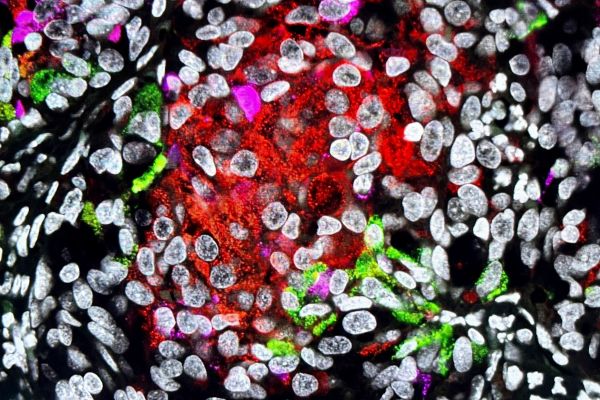
Type 1 diabetes affects about 300,000 people in Italy and more than 9 million worldwide. It is an autoimmune disease in which the immune system progressively attacks and destroys pancreatic beta cells, the cells responsible for insulin production.
Immunological therapies developed so far have shown limited and often transient efficacy. While some approaches can temporarily slow the decline of beta-cell function, they rarely succeed in durably modifying the underlying autoimmune response.
The research question underlying this study
The study was based on a seemingly counterintuitive hypothesis: using pancreatic islet transplantation not as a replacement therapy for lost or dysfunctional cells, but as a biological platform to expose the immune system to beta-cell antigens in a controlled context, taking advantage of a brief period of immunomodulation.
The primary goal was not long-term graft survival, but rather to guide the immune system toward a more regulated and less aggressive response to beta-cell antigens, thereby mitigating the autoimmune destruction that characterizes the disease.
Six patients with newly diagnosed or early-onset type 1 diabetes were enrolled. Each received a quantity of pancreatic islets insufficient to restore insulin production, yet sufficient to provide a meaningful antigenic signal. Islet infusion was combined with a short-term immunomodulatory regimen.
Clinical and immunological outcomes
One year after transplantation, all six patients showed stable residual beta-cell function. In the early stages of type 1 diabetes, this function typically declines rapidly due to ongoing immune-mediated destruction. The temporary stabilization observed after treatment suggests that the autoimmune process may have been modulated by the combined strategy of limited islet infusion and short-term immunomodulation.
This regulatory window may have dampened inflammatory and autoimmune responses, promoted the expansion of regulatory T lymphocytes, and reduced immune reactivity against beta-cell antigens.
At the one-year follow-up, patients also experienced partial clinical remission, with improved glycemic control and reduced insulin requirements.
Long-term follow-up revealed more heterogeneous outcomes. Five years after treatment, two patients maintained stable insulin-producing capacity, two retained approximately half of their initial function, and in the remaining two, beta-cell function progressively declined, following the classic course of the disease.
Parallel immunological analyses supported the concept of a controlled engagement of the immune system. These included an increase in regulatory T lymphocytes, no evidence of amplified autoimmunity, and transient antibody responses consistent with rejection of the infused islets—an expected and non-pathological event during the early phases following transplantation.
Together, these findings suggest that, during the immunomodulation window, the immune system interacted with transplanted islets in a more regulated manner than typically observed in type 1 diabetes.
Significance and future perspectives
The study proposes a potential paradigm shift in the treatment of type 1 diabetes: pancreatic islet transplantation as an immunological tool rather than a replacement therapy.
If confirmed by larger, controlled clinical studies, this strategy could form the basis for new immune-tolerance approaches. This perspective becomes particularly relevant in light of emerging technologies enabling the generation of islets from stem cells, which could allow repeated and personalized antigenic exposures over time.
«This study represents a proof-of-concept that the approach is safe and biologically active», concludes Piemonti. «The availability of stem cell-derived islets could make it possible to repeat these infusions, potentially strengthening immune education. Larger controlled studies are now needed to validate these findings.»
Written by: Laura Celotto
Published on: 07/01/2026